
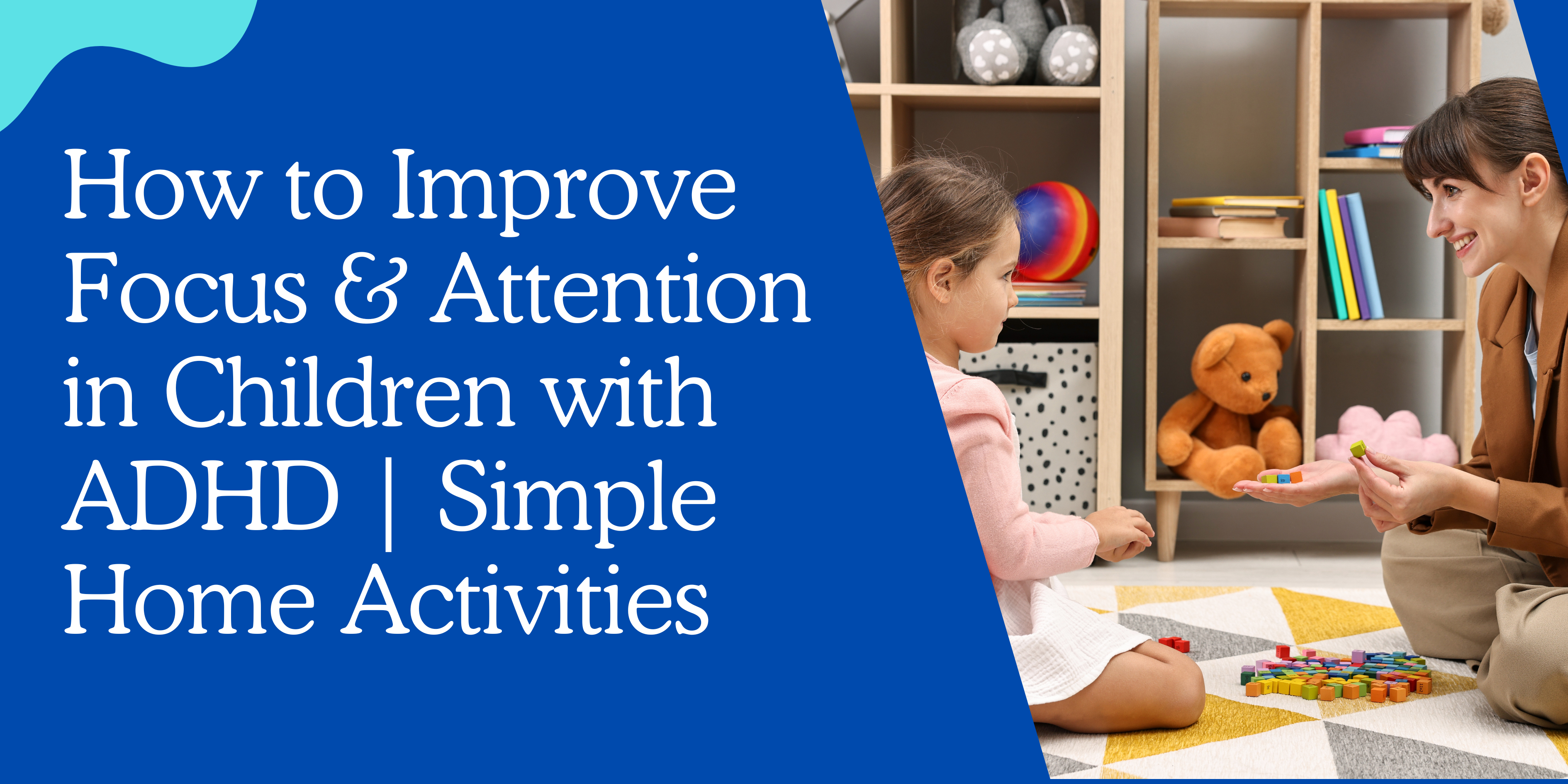
How to Improve Focus & Attention in Children with ADHD: Simple Home Activities
Improving focus and attention in children with ADHD can be both a challenge and an opportunity. Every child with ADHD learns differently — and with the right support, they can develop strong concentration skills, better self-regulation, and confidence in daily tasks.
While professional guidance is essential, many parents don’t realize how much progress can be made right at home. Through simple, structured, and enjoyable activities, you can help your child strengthen focus, attention, and emotional balance in a fun and supportive way.
In this guide, we’ll explore effective home activities to improve attention in children with ADHD, practical tips for parents, and how to create a focus-friendly environment.
Understanding ADHD and Focus Challenges
Attention-Deficit/Hyperactivity Disorder (ADHD) affects the brain’s executive functions — skills responsible for managing attention, organization, impulse control, and memory. Children with ADHD often struggle to stay focused, follow instructions, or sit still for long periods.
This doesn’t mean they can’t focus — rather, they focus differently. With the right environment and engaging activities, their natural energy and curiosity can be directed productively.
The key is to combine structure, movement, and creativity to build attention span gradually.
Create a Distraction-Free Environment
Before diving into activities, it’s important to set up the right space. A well-organized and calm environment helps your child stay centered.
You can:
- Choose a quiet, clutter-free study corner.
- Reduce background noise and visual distractions.
- Keep necessary materials easily accessible.
Having a predictable space helps children with ADHD associate that area with focus and calm. Over time, this structure promotes better self-control and concentration.
Use Movement-Based Activities
Children with ADHD often focus better when they are physically active. Movement helps release energy, improve blood flow to the brain, and enhance attention.
Here are some simple movement-based activities you can do at home:
- Yoga for kids: Short, guided yoga sessions promote body awareness and calmness.
- Ball games: Passing or catching games improve coordination and sustained attention.
- Dancing or music-based play: Moving to rhythm enhances concentration and memory.
Even a 10-minute movement break between study sessions can reset their focus and improve performance.
Mindfulness and Breathing Exercises
Mindfulness is one of the most effective ways to improve focus in children with ADHD. It helps train the brain to stay in the present moment and enhances emotional regulation.
Simple mindfulness activities include:
- Deep breathing: Teach your child to inhale slowly, hold, and exhale.
- Bubble breathing: Blow bubbles slowly to practice control and patience.
- Guided imagery: Ask your child to visualize a calm place and describe it in detail.
Encourage Structured Playtime
Children with ADHD thrive on structure and predictability. Structured playtime helps them stay organized and engaged while building focus naturally.
Try activities like:
- Puzzles and building blocks: They strengthen problem-solving and patience.
- Board games: Games like “Memory” or “Simon Says” improve working memory and listening skills.
- Sorting and sequencing tasks: Arranging toys by size, color, or order enhances visual and mental organization.
Make it a daily routine — 15–20 minutes of structured play can significantly boost cognitive attention over time.
Focus-Enhancing Sensory Activities
Sensory play is a fantastic way to engage children with ADHD. It helps regulate their energy levels and enhances awareness.
You can try:
- Playdough or slime: Squeezing and molding builds hand-eye coordination and relaxation.
- Water play: Pouring, stirring, and measuring water encourages focus and calm.
- Sensory bins: Fill containers with rice, beans, or sand and hide small objects for them to find.
These tactile activities are soothing and help your child stay engaged for longer periods without feeling pressured.
Break Tasks into Small Steps
Large tasks can feel overwhelming for children with ADHD. The trick is to break them into smaller, achievable steps.
For example, instead of saying, “Clean your room,” try:
- “Pick up the toys first.”
- Then, “Fold the clothes.”
- Finally, “Put books back on the shelf.”
Each small success boosts motivation and teaches time management — key components of improved focus.
Use visual checklists or reward charts to reinforce consistency. Children respond well to positive feedback, especially when they see their own progress.
Build a Consistent Routine
Consistency creates security and predictability — two things that help children with ADHD stay focused.
Try maintaining:
- Regular wake-up and bedtime hours.
- Fixed meal and study times.
- Consistent daily schedules for schoolwork and play.
Encourage Creative Expression
Art, music, and storytelling allow children with ADHD to express themselves freely and build concentration naturally.
Activities to try:
- Drawing or painting: Helps channel focus and creativity.
- Storytelling: Encourage them to narrate stories or make comic strips.
- Music: Learning an instrument or listening to rhythmic tunes improves auditory focus.
Practice Focus Games
Fun and interactive games can strengthen attention span without feeling like work.
Try these easy focus games at home:
- “I Spy” game: Improves observation and sustained attention.
- Memory cards: Boosts working memory and patience.
- Freeze dance: Encourages impulse control and listening skills.
Positive Reinforcement and Patience
Children with ADHD respond best to positive encouragement. Celebrate even small improvements to build self-esteem and motivation.
Instead of focusing on mistakes, highlight their efforts and progress. Statements like, “You focused really well today!” or “I love how you finished that puzzle!” go a long way in reinforcing good behavior.
Remember, every child learns differently — progress takes consistency, empathy, and time.
Partner with Professionals When Needed
While home activities play a big role, professional support can provide deeper guidance. Occupational therapists, child psychologists, or behavioral therapists can help design personalized programs that target focus and attention.
Combining expert strategies with home-based activities ensures holistic development and long-term success.
The Parent’s Role: Patience, Structure & Support
The most powerful tool for improving attention in children with ADHD is a supportive environment. Parents who stay calm, patient, and consistent can make an incredible difference.
Keep communication open, model positive focus behaviors, and encourage self-awareness. When children feel understood and supported, their ability to concentrate improves naturally.
Small Steps, Big Changes
Helping children with ADHD improve focus and attention is not about perfection — it’s about progress. Simple home activities, a structured routine, and consistent encouragement can create powerful changes in behavior and learning.
Each child is unique. What works for one may differ for another, but with creativity, patience, and love, every small effort contributes to long-term growth.
With the right approach, home can become the perfect space for your child to thrive — one focused step at a time.